


Learning how to layer clothes for men without looking bulky changed how I dress during colder months. I no longer depend on one oversized sweater or a heavy coat that makes my upper body look twice its normal size.
The solution is not wearing fewer clothes. It is controlling each layer’s thickness, fit, length, and purpose. Every garment should earn the space it occupies.
Why Layered Outfits Often Look Too Bulky
Most bulky outfits fail before the coat goes on. A loose T-shirt bunches beneath a thick sweatshirt, which then gets compressed inside a narrow jacket. The final outfit looks swollen and feels restrictive.
Oversized pieces can work individually. However, stacking several oversized garments creates excess fabric around the shoulders, stomach, and arms.
Fit also affects warmth. Layers should skim the body without squeezing it. OSHA recommends loose-fitting layers for cold conditions because trapped air provides insulation, while tight clothing can restrict circulation. The goal is controlled breathing room, not shapeless volume.
How To Layer Clothes For Men Without Looking Bulky
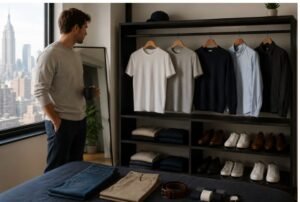
The simplest answer to how to layer clothes for men without looking bulky is to move from thin to thick. I usually stop at three main garments: a base, a mid-layer, and an outer layer.
Start With a Close-Fitting Base Layer
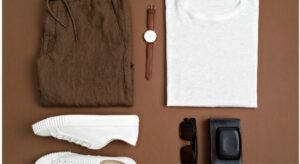
The base should lie flat against your torso. A lightweight crew-neck T-shirt, long-sleeve tee, henley, or thin turtleneck works well.
Choose a neckline that stays hidden beneath the next garment unless you want it visible. A loose collar under a crew-neck sweater often folds, twists, and adds untidy volume.
The base should fit close, but it should not pull across your chest or underarms. I raise both arms before adding another layer. If the shirt rides several inches above my waistband, it is too short or tight for layering.
For genuinely cold conditions, wool, silk, or synthetic base layers manage moisture better than ordinary cotton. The CDC notes that wool, silk, and polypropylene hold more body heat than cotton, especially when damp conditions become a concern.
Add Warmth With a Fine Mid-Layer
Your mid-layer supplies most of the visible depth and warmth. I prefer fine-gauge merino sweaters, lightweight cardigans, brushed cotton shirts, quarter-zips, or neat overshirts.
Avoid combining a thick hoodie, chunky cable-knit sweater, and fitted coat. These pieces compete for the same space.
A good mid-layer should follow your torso without clinging. Its sleeves must slide comfortably inside the coat sleeves. If you need to force your arms through, either the mid-layer is too thick or the outerwear is too small.
Finish With Structured Outerwear
Outerwear should create the outfit’s final outline. A tailored topcoat, Harrington jacket, field jacket, leather jacket, bomber, or clean wool overcoat can sharpen softer layers underneath.
Look for defined shoulders, a smooth chest, and enough room across the upper back. The coat should close without forming an X-shaped pull around the buttons or zipper.
Structured does not mean skin-tight. Textile research shows that air gaps can improve insulation efficiency. Crushing every layer together may reduce both comfort and useful warmth.
Choose Warm Fabrics Without Extra Thickness
Fabric efficiency matters more than fabric weight. A thick garment is not automatically warmer, more breathable, or better suited to layering.
Merino wool is one of my most reliable choices because a fine sweater can provide warmth without the volume of heavy fleece. Wool fibres absorb and release moisture vapour, which can make the garment feel less damp and clingy.
Cashmere also provides warmth in a relatively fine knit, although it requires more careful maintenance. Brushed cotton twill works for overshirts because it adds texture while lying flatter than thick sherpa-lined styles.
Technical nylon works well in wind-resistant shells and slim quilted vests. A thin vest warms the torso without adding another set of sleeves, making it useful beneath a field jacket or overcoat.
Use the Three-Zone Bulk Budget
My most effective method for how to layer clothes for men without looking bulky is what I call the three-zone bulk budget. I inspect the shoulders, elbows, and waist because these areas reveal excess fabric first.
At the shoulders, seams should remain near the natural shoulder line. Multiple dropped-shoulder garments can make your upper body appear wider.
At the elbows, bend both arms fully. The fabric should flex without creating a thick roll inside the outer sleeve.
At the waist, sit down and zip or button the coat. If several layers balloon above your belt, replace the longest or loosest inner garment.
I finish with a 30-second movement test: reach forward, lift both arms, sit, and turn sideways. An outfit that looks sharp while standing still may bunch badly during normal movement.
Balance Proportions, Lengths, Colors, and Textures

Your layers should create vertical depth rather than horizontal width. I vary hemlines slightly, but I avoid extreme differences.
A shirt may extend half an inch below a cropped jacket. A coat should generally cover the layers beneath it. Several uneven tails hanging below the outerwear look accidental rather than stylish.
Keep your trousers streamlined, but not spray-on tight. Slim-straight jeans, tapered chinos, or tailored trousers balance a layered torso better than heavily oversized pants.
Color also changes visual weight. Navy, charcoal, brown, olive, cream, and black blend easily. A tonal outfit can make the body appear longer because it avoids harsh horizontal breaks.
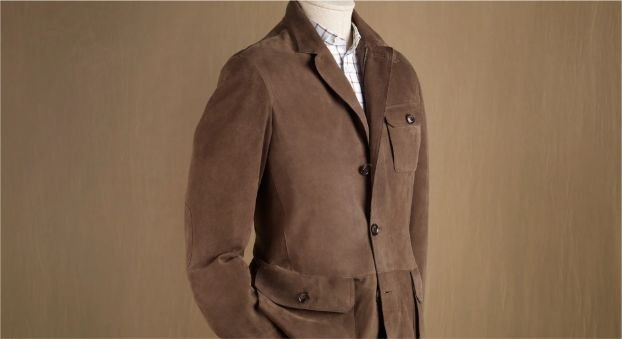
Use texture for contrast. Combine a smooth cotton tee, fine wool knit, and matte suede jacket. This creates depth without relying on several bold patterns.
Your natural build still matters. Understanding how to dress for your body type as a man can help you choose jacket lengths, trouser shapes, and shoulder structures that support your proportions.
Outfit Formulas for Different Occasions
For an elevated casual outfit, I wear a fitted white T-shirt, an open denim overshirt, a suede jacket, and dark straight-leg jeans. The overshirt adds visible depth without acting like a second coat.
For the office, I pair a lightweight button-down with a fine-gauge V-neck sweater and a tailored wool topcoat. The V-neck exposes part of the shirt, preventing the upper chest from looking visually crowded.
For a rugged weekend outfit, I use a henley, a thin insulated vest, an olive field jacket, and tapered denim. Removing the mid-layer sleeves protects mobility.
In wet or windy weather, I replace the decorative outer jacket with a breathable shell. Government cold-weather guidance recommends an insulating middle layer and an outer layer that protects against wind and rain while allowing ventilation.
Common Men’s Layering Mistakes
The most common mistake is buying the same size in every garment without considering its role. Your outer coat may need more room than a jacket worn only over a T-shirt.
Another mistake is stacking several long garments. This creates fabric congestion around the hips and makes shorter men appear visually compressed.
Avoid placing thick collars on top of each other. A hoodie beneath a shawl-collar cardigan and high-collar coat crowds the neck and pushes the shoulders outward.
Do not combine too many focal points. A patterned shirt, textured sweater, bright vest, and statement coat make the outfit feel heavier. Choose one dominant item and let the other layers support it.
Finally, remove unnecessary layers indoors. Knowing how to layer clothes for men without looking bulky also means building an outfit that still works after the coat comes off.
Frequently Asked Questions
1. How many layers should a man wear without looking bulky?
Three main layers usually provide enough warmth and depth without causing excessive bunching.
2. How can men layer clothes for winter while staying slim?
Use a moisture-managing base, a fine insulating mid-layer, and structured weather-resistant outerwear.
3. Can you wear a hoodie under a jacket without looking bulky?
Yes, but choose a lightweight hoodie with a neat hood and pair it with a jacket that has enough shoulder and sleeve room.
4. What is the best sweater for layering under a coat?
A fine-gauge merino wool crew-neck, V-neck, or turtleneck offers warmth with less thickness than a chunky knit.
Final Layer, Zero Puff
Once I understood how to layer clothes for men without looking bulky, I stopped judging warmth by garment thickness. I now focus on fabric efficiency, clean shoulders, flexible elbows, and a smooth waist.
Build the outfit one piece at a time. After adding each garment, check your side profile and move your arms. If one layer creates most of the bulk, replace that piece instead of rebuilding the entire outfit.
Warm is good. Stylish is better. Looking like your coat swallowed you is optional.